


[/p]
[p]
Tromboncino squash is one of those squashes that you will not forget because of its distinctive curved shape. Tromboncino, which means little trombone in Italian, has a distinctive appearance like the musical instrument it is named after, with its slender appearance blooming into a bulbous end. While the squash is popular in Italy, it is not as well-known in other parts of the world. So, let’s find out more
<a name=\'more\'></a>about this wonderful squash.[/p]
Tromboncino squash, a member of the Cucurbitaceae family, grows on climbing vines and is ideal for growing on a trellis or an archway. The squash needs enough room in the garden for it to hang and grow freely as it can go up to 2-3 kgs in weight. However, the sweet-tasting yellow-green fruit is well worth the effort as it is one of those few winter squashes that can also be harvested in the summer. In the winter, you will usually get to taste the young variety that has a sweet flavor and makes an excellent addition to salads. If you let it mature on the vine, it turns a lovely golden yellow. Mature tromboncino has a buttery taste and can be best likened to watery butternut squash. You can use it for soups and curries. [1] [2]
Tromboncino squash is also called climbing zucchini,Trombolino d’Albenga, Zuchetta rampicante, and serpentine squash.
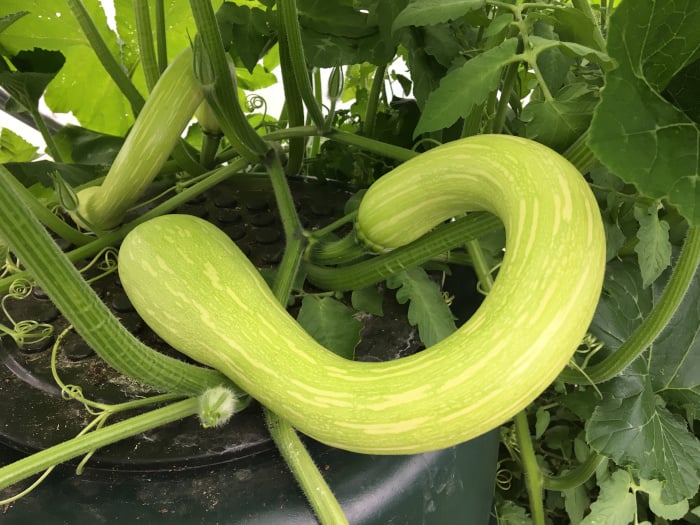
Tromboncino squash is named after the trombone musical instrument. Photo Credit: Shutterstock
According to the USDA , 100 grams of raw winter squash (about 2/3 cup) contains only 34 calories and 1.5 grams of dietary fiber. Like other squash varieties, tromboncino squash is rich in vitamins A and C and contains high levels of beta-carotene. For more information on winter squashes, you can head over to 11 Amazing Benefits Of Winter Squash. [3] [4]
All parts of the squash are edible, including its seeds. Here are the most common but delicious ways of using tromboncinos:


